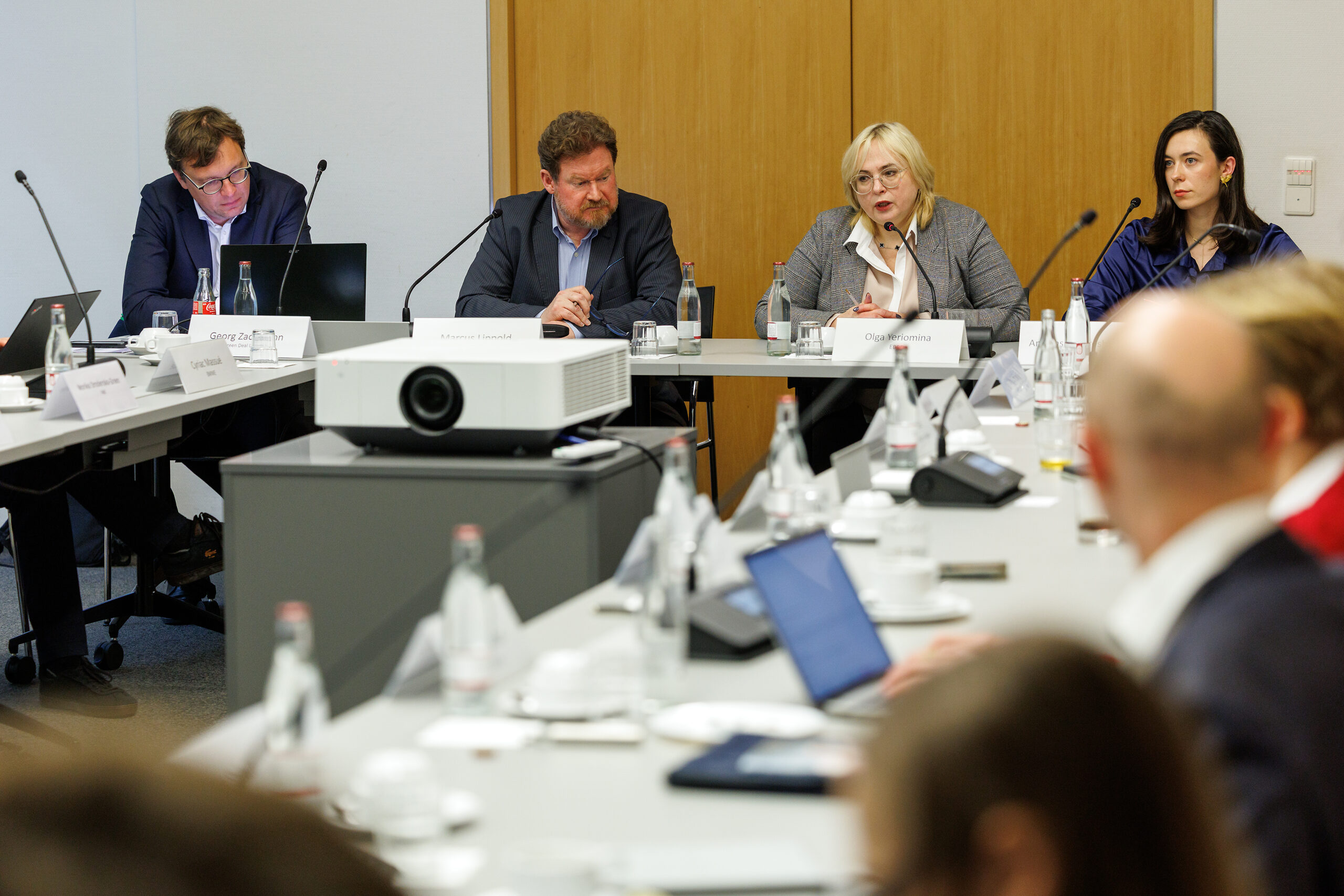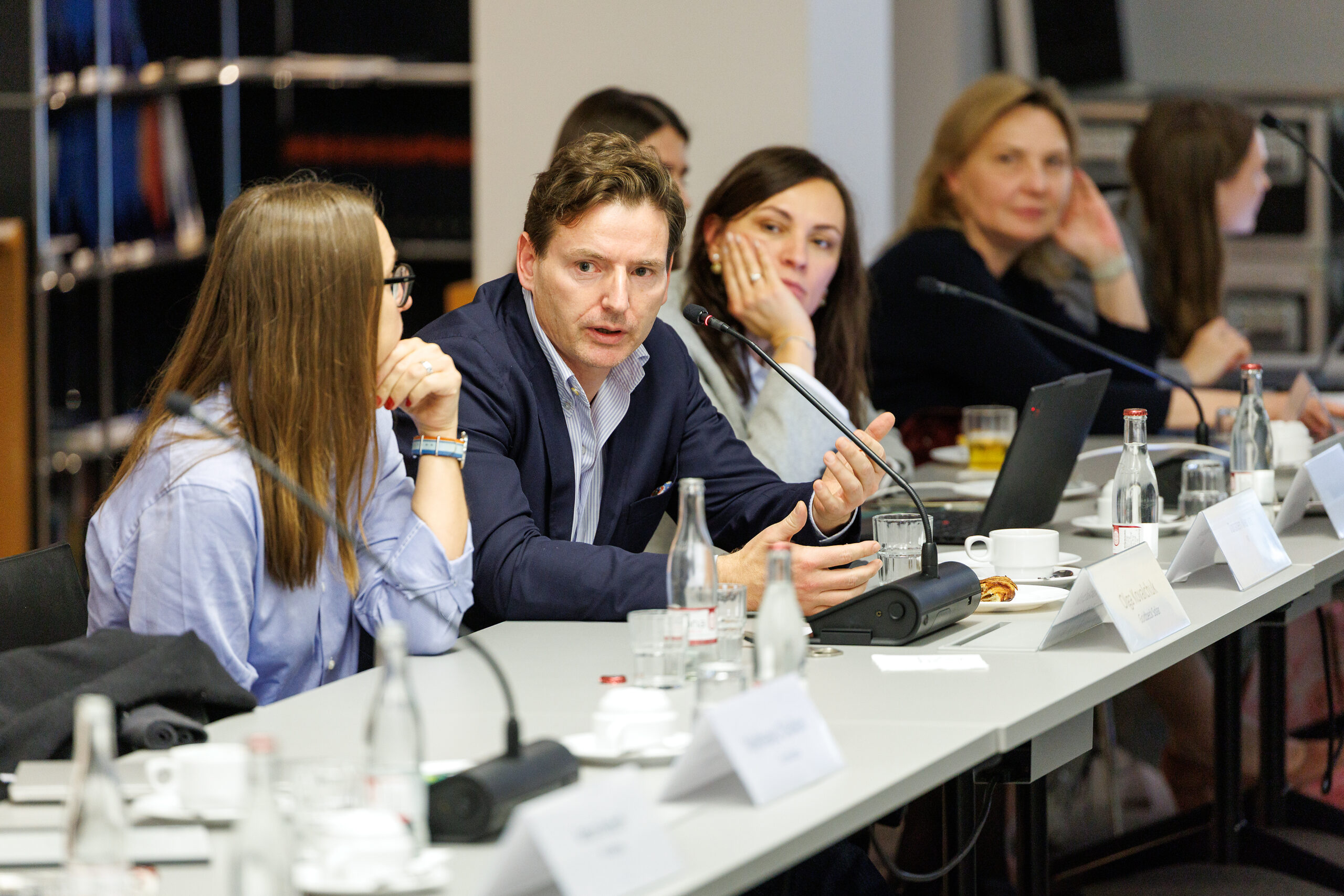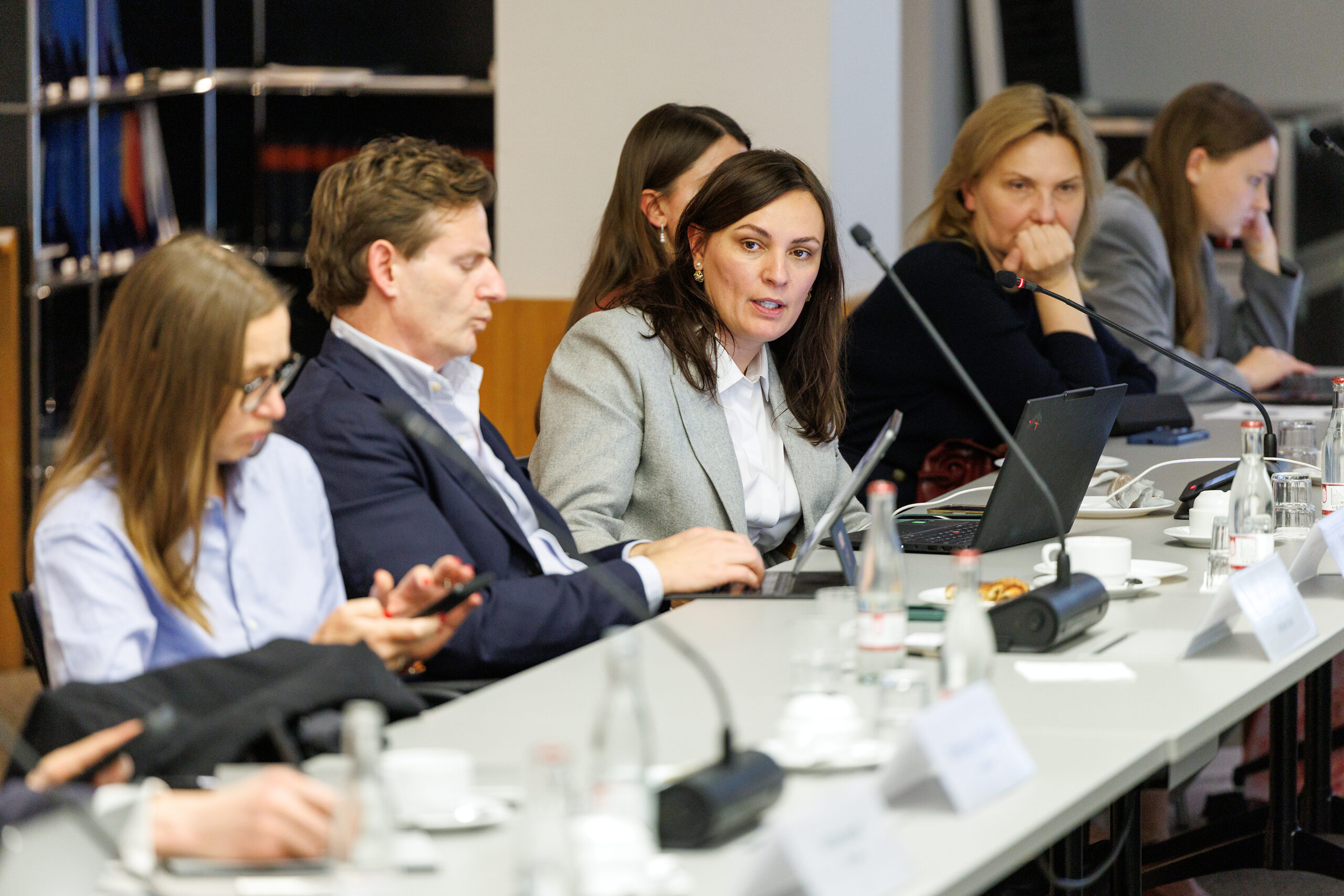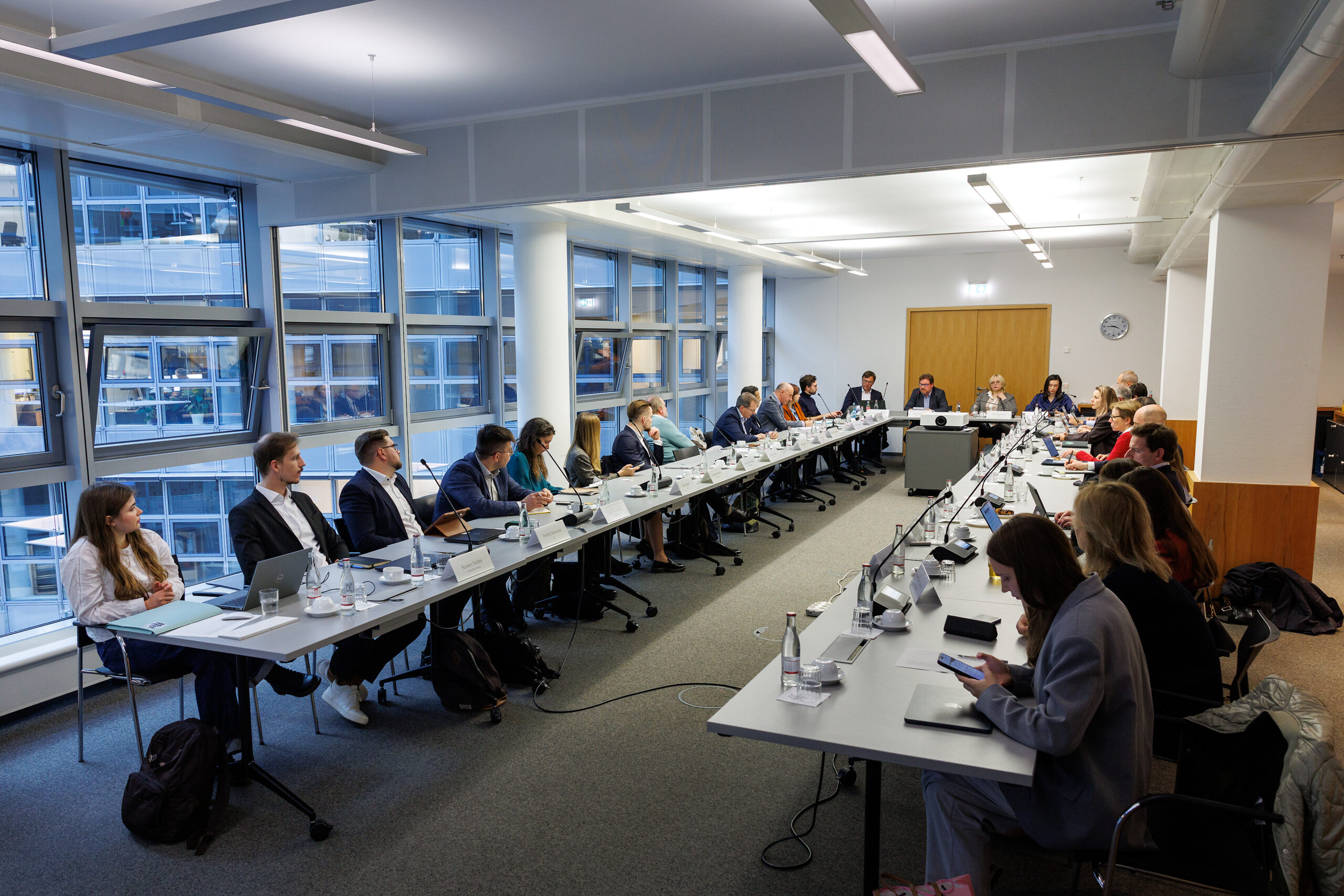
The event “URMM in Focus: De-risking Pathways for Renewable Investments”, jointly organised by the European-Ukrainian Energy Agency (EUEA) and the Green Deal Ukraїna project (GDU) of Helmholtz-Zentrum Berlin, took place in Berlin on November 4.
The event gathered representatives of the European Commission, EBRD, renewable energy (RES) investors, IFIs, DFIs, donors and banks. It was the first meeting of such format to discuss the launch of the Ukraine Renewable Energy Risk Mitigation Mechanism (URMM) — a joint initiative by the EBRD and the European Commission aimed at reducing risks for RES investors during the war and post-war recovery period.
Anastasiia Vereshchynska, CEO of the EUEA, opened the event, noting that offtake is the single biggest risk for investors in Ukraine’s renewables sector, which led to the development of the URMM concept as a market risk mitigation tool. EUEA, together with the Ukrainian Wind Energy Association (UWEA) and GDU, worked on the concept over the past year and are happy to see it being implemented by EBRD and the European Commission.
The Ukraine Renewable Energy Risk Mitigation Mechanism (URMM) was announced at the Ukraine Recovery Conference (URC) in Rome, where the EBRD, which is structuring and channelling donor funds to the mechanism, signed letters of intent with key donors – the European Union and the Netherlands – to move forward.
The mechanism is designed to ensure revenue stability for RES producers and attract up to €1.5 billion in private investments to build 1–1.4 GW of new capacity, in wind and solar, most likely co-located with storage. URMM provides for competitive auctions and the introduction of a price stabilisation mechanism: if the market price is lower than reference price, producers receive compensation; if higher, part of the revenue is returned to the fund, creating a financial buffer for possible future pay-outs.
“The mechanism is designed for 15 years and aims to ensure stability during the war and recovery. Its success depends on sufficient donor capitalisation and a clear operational design”, said Marcus Lippold, Team Leader, Green Deal Ukraine Service, DG ENEST at the European Commission.
Olga Yeromina, Associate Director at the EBRD, announced that the bank expects €150 million in unfunded guarantees and €30 million in grants from the European Commission, along with contributions from the Netherlands (€12 million), Germany, and Switzerland. In total, the goal is to raise €300 million in combined grants and guarantees.
“URMM will cover the key risk for investors — the risk of stable offtake. Without it, it’s impossible to structure long-term financing. Stable power purchase arrangements will make RES investments more accessible to a broader range of players”, Yeromina emphasised.
The mechanism is being implemented in cooperation with the International Finance Corporation (IFC) and the World Bank. Funds will be managed by an independent administrator — a reputable entity backed by donors. The launch of URMM and the first auctions are planned for the second half of 2026.
Dr. Georg Zachmann, Scientific Lead of the Green Deal Ukraїna project and Senior Fellow at Bruegel, highlighted: “URMM is not just a technical instrument. It’s a response to the political and market uncertainty that has been holding back renewable energy investments. It transfers politically driven risks away from investors to those who shape policy — and helps rebuild trust in Ukraine as an energy market.”
Zachmann also emphasised that the war has made distributed generation critically important for energy resilience, and that the market now needs new mechanisms of trust after years of regulatory instability and debts from the Guaranteed Buyer.
The comprehensive discussion between participants underscored the importance of revenue stabilisation for RES investors, along with investor risk minimisation, as well as the need for early involvement of all market participants in implementing the URMM.