Smarter Finance for EU “Banking on Green Homes” event makes finance case for certified green homes
-European centre of excellence launched
-French partners with €348bn of certified green homes join
-Green homes training launched for finance professionals
05 June
Certified green homes are becoming mainstream across Europe – boosted by collaboration from experts in green building and finance.
Smarter Finance for EU (Smarter4EU), a pan-European initiative dedicated to the creation of a mainstream European green housing market, announced a range of new initiatives at the “Banking on Green Homes” event in Madrid, Spain on Wednesday, 28 May.
The consortium announced the launch of a European centre of excellence to help introduce green home certification throughout Europe, with support for certification bodies, banks, developers, municipalities and the full construction supply chain, as the industry grapples with requirements to decarbonise Europe’s housing stock.
To help the finance industry avoid the risk of greenwash and to understand the business case for genuinely green homes, the consortium has also launched tailored green homes training for the finance industry.
Before the conference, Alliance HQE, which has certified over €348bn worth of green homes in France, signed a memorandum of understanding to collaborate with Smarter4EU.
The Smarter4EU consortium includes green building councils who have certified green homes at scale in countries including Romania, Ireland and Spain, while collaborating with Portuguese and Ukrainian partners to develop new green home certification systems. Meanwhile green building councils in Poland, Italy, Bosnia have introduced green home certification in collaboration with the consortium, with other countries set to follow.
Project co-ordinator Elena Rastei said the consortium’s work was focused on “Families seeking sustainable homes, businesses investing sustainably and communities building climate resilience,” and emphasized the importance of collaboration and sharing expertise to solve problems and unlock opportunities.
“The collaborative systems we have developed through Smarter Finance for EU aim to help transform the future,” said Rastei. “We have created lasting networks, shared knowledge and organic partnerships that will continue generating impact long after the formal project period ends. Leadership in this context means creating space for expertise to flourish, building bridges between different sectors and sometimes acknowledging that the best solutions emerge from collective intelligence rather than individual vision.”
Smarter4EU is aiming to unlock over €100bn worth of certified green homes across Europe, by aligning green home certification systems to new EU sustainability rules hitting the finance and property sectors.
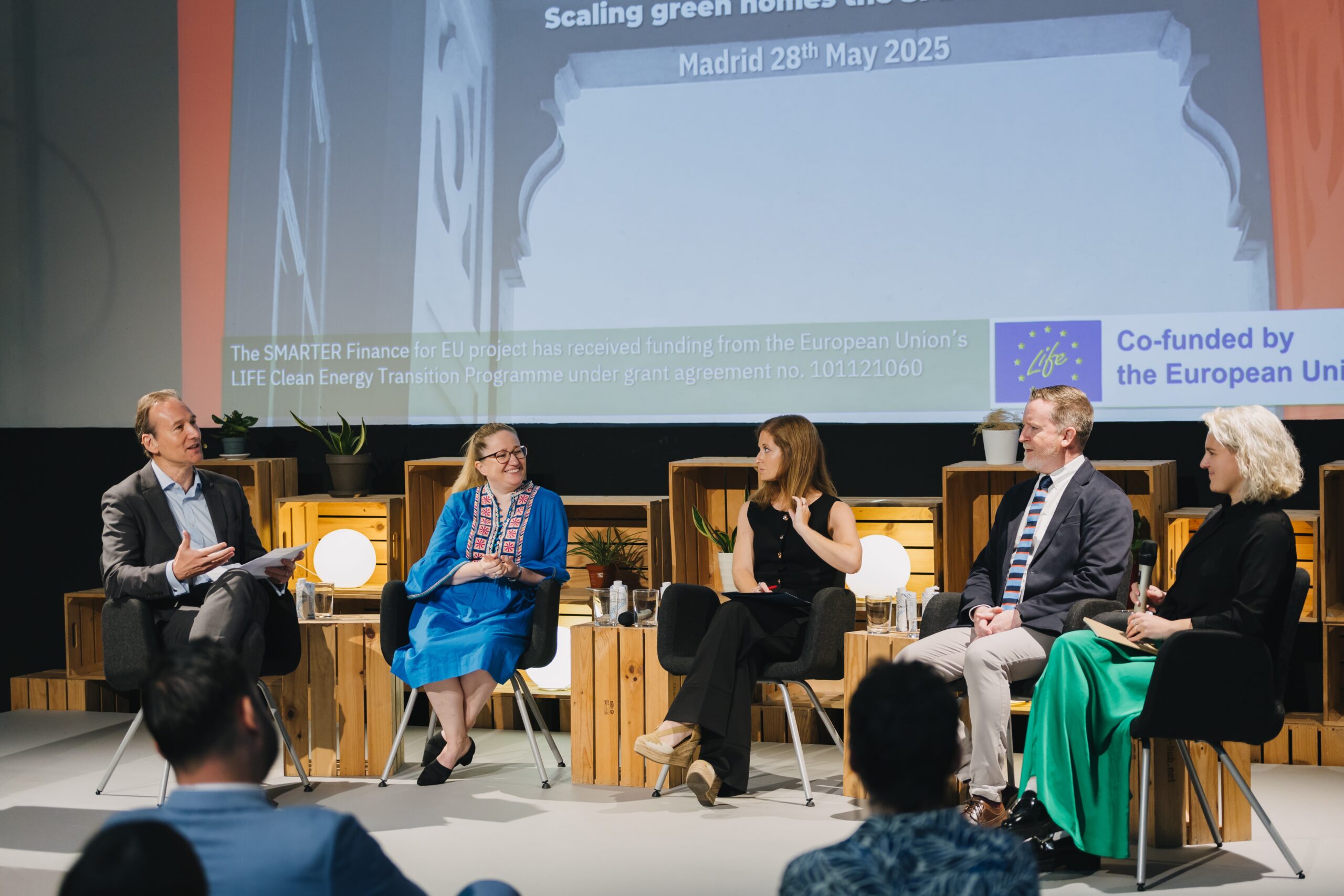
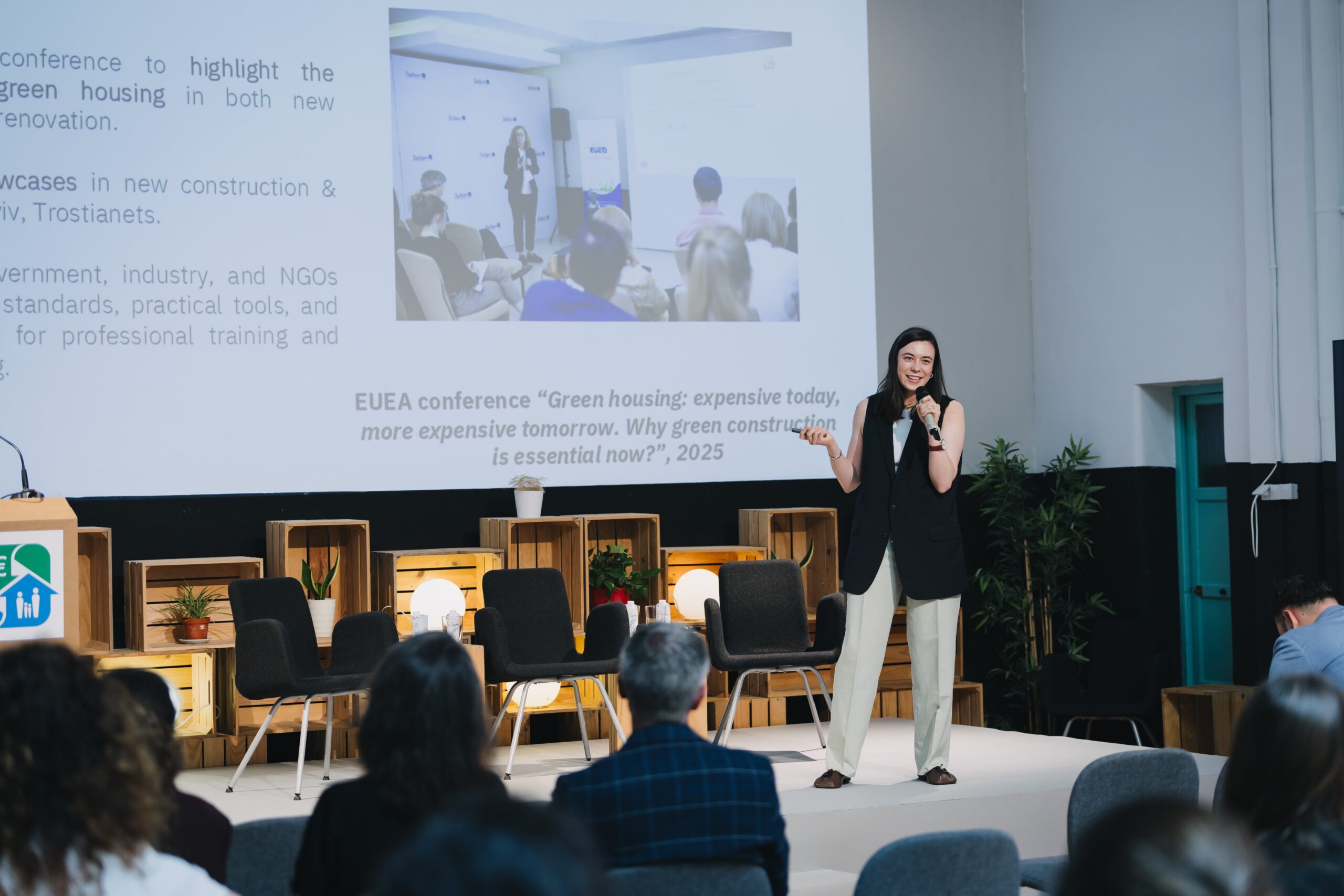
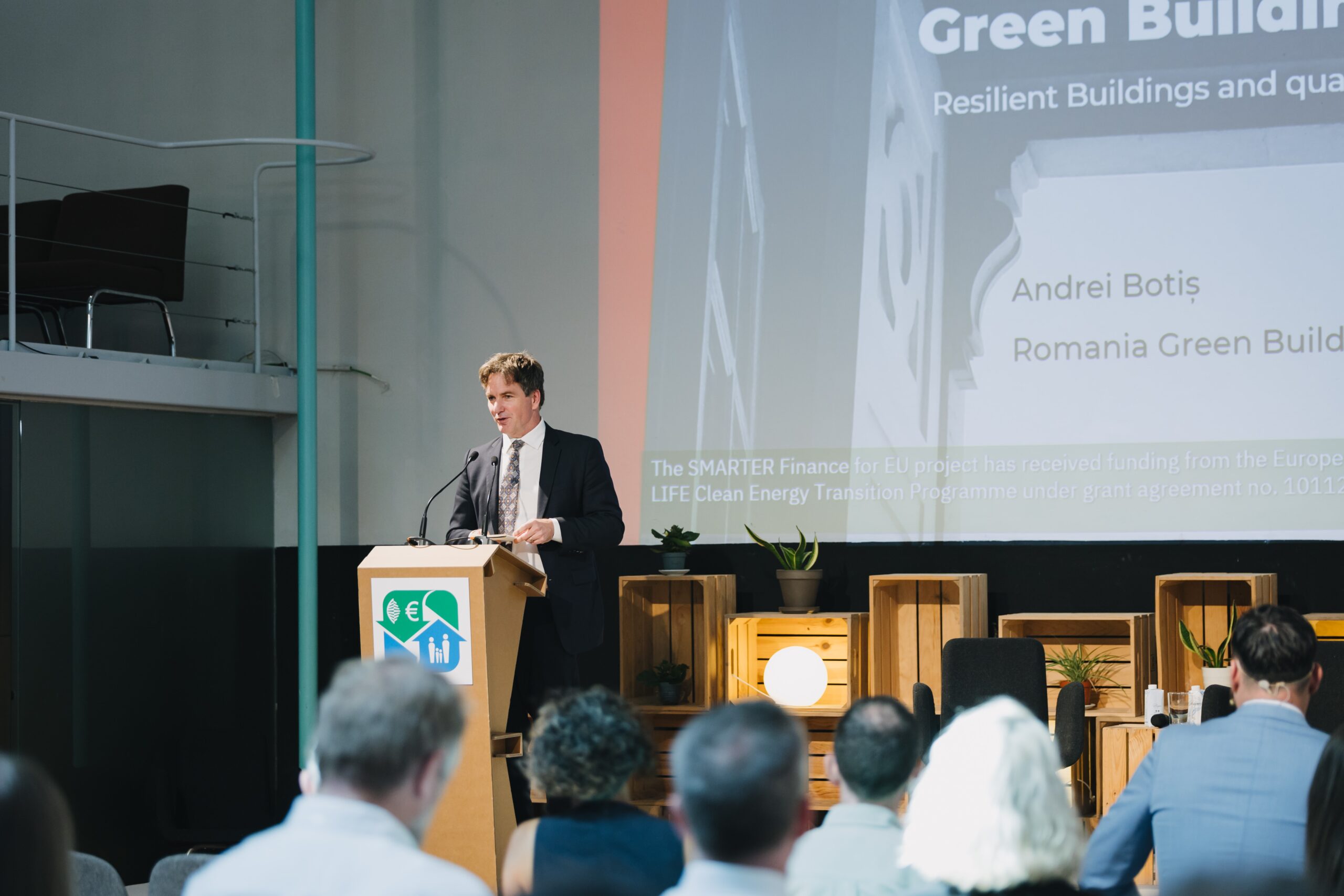
The Madrid conference brought together key stakeholders from finance and real estate along with policymakers and green building experts to explore the pivotal role the banking sector can play in financing energy-efficient and environmentally friendly housing across Europe.
Policy context
The case for green homes has been transformed by European policy and investor pressure. While in the past the EU buildings policy landscape had tended to focus on the energy use and carbon emissions associated with heating, cooling and lighting buildings, a raft of policy including the EU taxonomy on sustainable economic activities and a 2024 recast of the EU Directive on the Energy Performance of Buildings (EPBD) are widening the net.
Keynote speaker and European Greens co-chair Ciarán Cuffe, who was the European Parliament’s rapporteur on the new directive, stressed how the EPBD now requires EU member states to renovate existing buildings en masse – with the ultimate goal of a zero-emission European building stock by 2050.
Cuffe explained how Russia’s invasion of Ukraine added impetus to the argument for decoupling from gas and oil.
Ukrainians launching green homes certification
European-Ukrainian Energy Agency CEO Anastasiia Vereshchynska told delegates that Ukraine was introducing a green home certification system in spite of the country being at war. “Green housing is not just an option,” said Vereshchynska. “It is a practical solution for safe, comfortable and sustainable living in Ukraine.
Rotislav Rozsypal of the EU Directorate-General for Financial Stability, Financial Services, and Capital Markets Union (DG FISMA) said the work of Smarter Finance for EU was proving very important in helping to ensure housing projects meet the requirements of the EU taxonomy on sustainable economic activities.
Addressing the impact of plans announced by the EU in February under the Omnibus package to simplify sustainability reporting rules for businesses, Rozsypal explained that the commission was working to avoid moving backwards on sustainability while lessening the reporting burden on businesses. “We would like to keep the ambition while simplifying the rules”, he says.
About Smarter Finance for EU
The EU LIFE co-funded project, Smarter Finance for EU, is dedicated to driving the change Europe needs in the development of finance and credible green certification for homes.
Smarter has unlocked finance and green home certification for over 31,000 new homes across Europe, by taking a systemic, multidisciplinary approach to solving a systemic problem. The needs and motivations of all of the essential stakeholder groups that are critical to moving the green finance topic forward to promote greener homes for Europe’s are considered.
With energy poverty on the rise across Europe in the aftermath of Russia’s invasion of Ukraine, the consortium also includes a focus on developing hybrid green finance products to help lift vulnerable people out of energy poverty and provide healthy, comfortable homes with low exposure to energy price spikes.
Co-ordinated by the Romania Green Building Council, the partners in Smarter Finance for EU include the Irish Green Building Council, Luxembourg-based sustainable finance facilitator EnerSave Capital, the association Energy Efficient Cities of Ukraine, Green Building Council España, Portuguese energy agency Adene, Habitat for Humanity International, the European-Ukrainian Energy Agency and Passive House Plus publishers Temple Media Ltd, with an advisory board that also includes representatives of the World Green Building Council, Green Council Bosnia-Herzegovina, Austrian Sustainable Building Council, Polish Green Building Council, Swedish Green Building Council, Green Building Council Italia, DGNB, Green Building Council France, Certivea and Norwegian Green Building Council.
A number of banking partners already offer finance products tied to green home certifications by partners in Smarter Finance for EU, and the EU Horizon 2020-funded programme which preceded it, Smarter Finance for Families.
A range of banks offer preferential green mortgages tied to Romania Green Building Council’s Green Homes certification, including Alpha Bank Romania, Banca Transilvania, BCR Erste Group, BRD Groupe Societe Generale, Garanti BBVA, Raiffeisen Bank Romania, Romanian Commercial Bank, Vista Bank and Libra Internet Bank, who also offer preferential development finance terms. Meanwhile, Smarter Finance for Families partner Polish Green Building Council has secured green mortgages on its Zielony Dom certified homes from BNP Paribas and BOS Bank.
Tailored development finance discounts of 0.1 to 0.5 per cent are available in Ireland for housing schemes certified to the Irish Green Building Council’s Home Performance Index (HPI) certification by pillar bank AIB and Home Building Finance Ireland.
For more information visit www.smarterfinance4.EU.
For interview requests contact: jeff@passivehouseplus.ie