As renewable technologies mature, policy makers, regulators and utilities are confronted with new challenges related to planning, managing and operating the power system. The rapid expansion of renewable resources prompts the need for a more flexible energy system to ensure that variable resources can be integrated into the power system reliably and effectively.
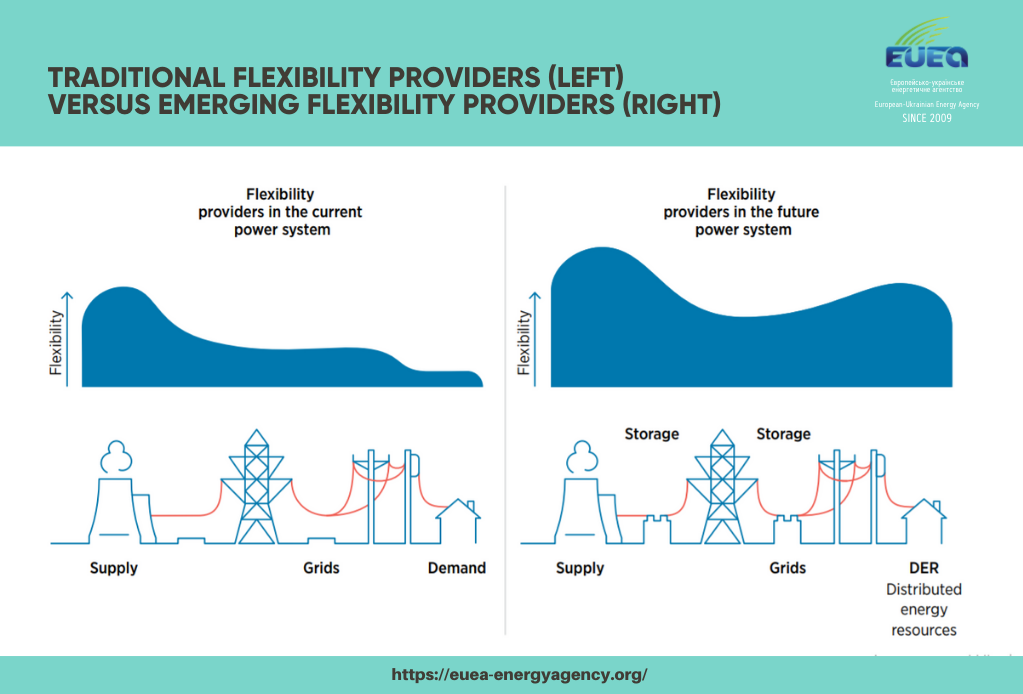
Traditionally flexibility has been provided by conventional thermal generation with high ramping capabilities, low minimum loads or short start-up times, such as opencycle gas turbines.
However, to integrate very high shares of RES, flexibility should be harnessed in all parts of the power system to minimise the total cost of providing flexibility. Electricity storage together with other mitigation measures (for example demand response, flexible generation, and smart transmission and distribution networks) could enable the integration of solar and wind power at very large scales (IRENA, 2018a, 2019b).
However, the pace at which electricity storage needs to be deployed in each of these cases varies depending on progress in the energy sector’s transformation, the economics of alternative technologies that can provide similar or alternative solutions and progress in electricity storage costs and performance.
For comparison, we offer you a comparative infographic.
Read more in IRENA report: