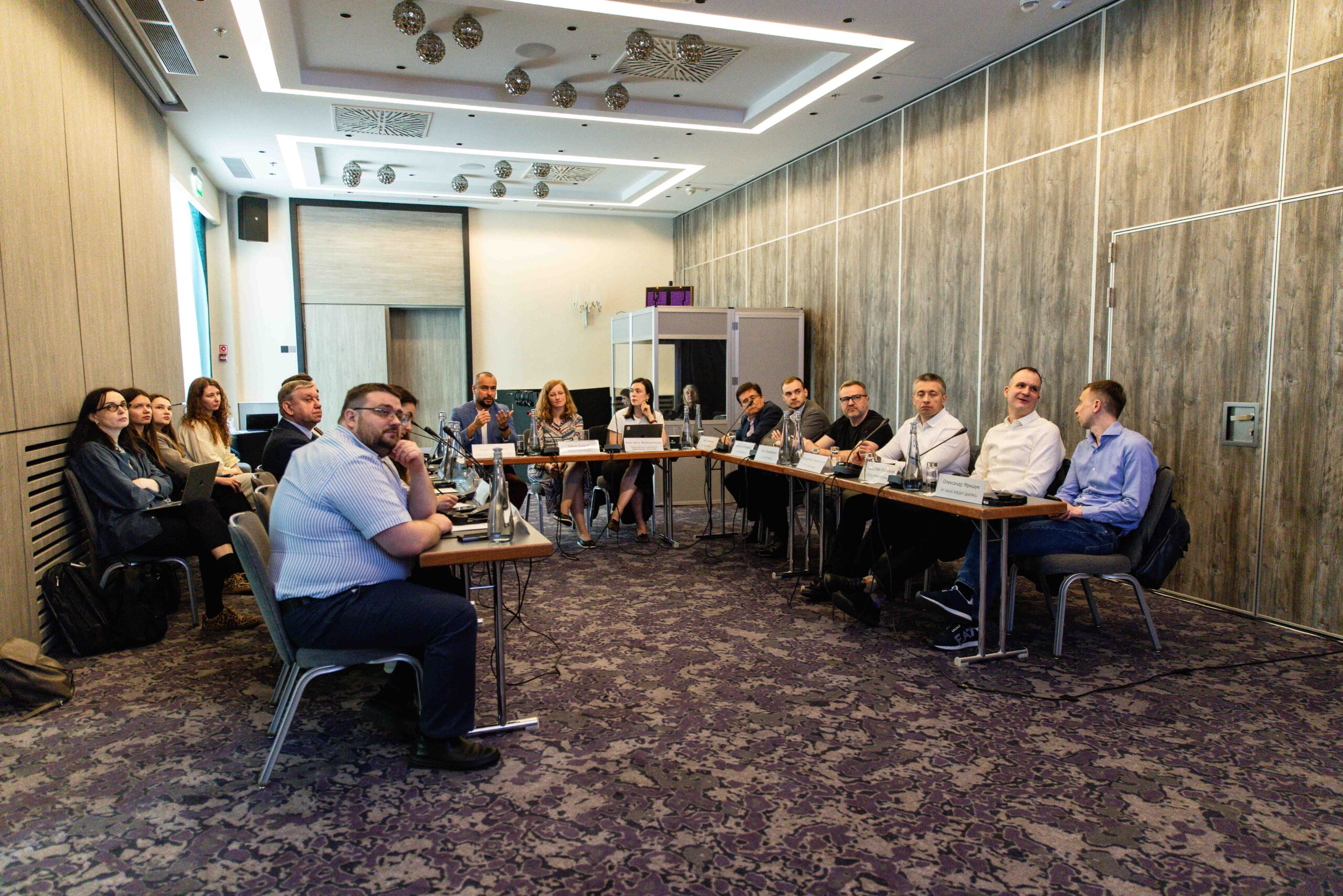
On April 30, 2025, Kyiv hosted an important event titled “Green, Affordable Housing for Ukraine: Financial Instruments organized by the European-Ukrainian Energy Agency as part of the international initiative SMARTER Finance for EU (SMARTER4EU).
The event served as the first platform for discussions on launching green financial mechanisms in the housing sector with Ukrainian banks.
Among the guests were representatives from more than 10 Ukrainian banks, including: JSC CB “GLOBUS” JSC “UKRGASBANK”, JSC “SKY BANK”, JSC “Oschadbank:, UKRSIBBANK BNP PARIBAS GROUP, JSC CB “PRIVATBANK”, JSC “SENSE BANK”, JSC “RAIFFEISEN BANK”, JSC “BANK CREDIT DNIPRO”, JSC “TASKOMBANK” and JSC “KOMINBANK”.
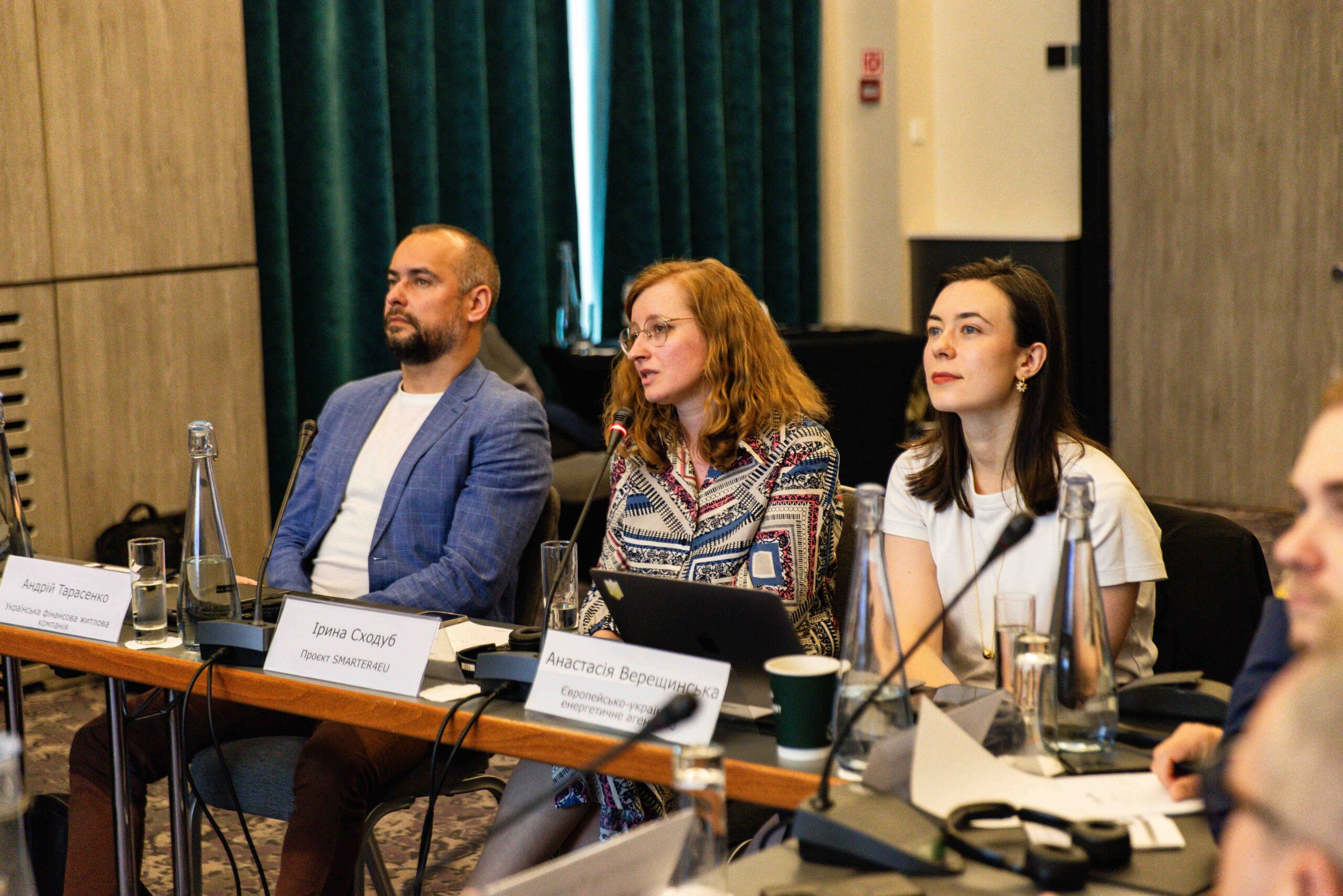
“This is the first time within this project that we are engaging directly with Ukrainian banks in such a broad format. Our goal is to present the tools we’ve developed and gather feedback. We aim to understand what conditions are needed for green housing to become a viable option in the Ukrainian market,” said Anastasiia Vereshchynska, CEO of the European-Ukrainian Energy Agency, in her opening remarks.
The program opened with an overview of the current state of the mortgage market in Ukraine, presented by Andrii Tarasenko, Director of the Business Development Department at PrJSC “Ukrfinzhytlo”. He emphasized that the potential for mortgage development in Ukraine is enormous, especially when comparing the mortgage loan portfolio-to-GDP ratio with European benchmarks. At present, however, mortgages in Ukraine are largely limited to a single state program — “Oselia”, which accounts for 98 % of the market. This situation is temporary and primarily due to prohibitively high market interest rates, which impede the development of conventional mortgage offerings. As the economy recovers and macroeconomic indicators improve, the situation is expected to evolve.
“eOselia” fulfills both a social mission — to provide affordable housing for citizens — and an economic one — to support and stimulate the construction industry. Today, most loans under the єOselya program are issued for the purchase of new buildings that comply with modern national construction standards. As the economy recovers, there will be an increasing need to introduce new tools, particularly those incorporating green components. However, challenges remain significant: for the average consumer, green housing is more expensive, and therefore requires support — either through interest subsidies or other incentives,” noted Tarasenko.
A key highlight of the event was the presentation of a green housing certification system developed for Ukraine, adapted to the requirements of the EU Taxonomy. Project expert Iryna Sukhodub explained that green housing is not just about energy efficiency. It encompasses a wide range of criteria, including indoor air quality, acoustic comfort, safe construction materials, environmental impact, reduced water consumption, circular economy principles, and building accessibility for various population groups. According to her, the certification system enables evaluation of whether a housing project aligns with environmental and social goals and — importantly — provides banks with an objective basis for making decisions about preferential financing.
Elena Rastei, Vice President of the Romania Green Building Council, shared practical insights into the implementation of green certification in the EU. Her presentation clearly demonstrated how partnerships between banks, developers, and certifying bodies help build trust in green projects and deliver real benefits to consumers — from lower interest rates to a better quality of life.
“We started with one bank and a few pilot developers. Today, we have dozens of partnership programs and over €4 billion in projects under implementation. But the key is the system — it works based on trust and transparency,” Rastei emphasized.
Throughout the discussions and presentations, a consensus emerged: Ukraine has a unique window of opportunity to embed green standards into its reconstruction process. As the country stands at the threshold of large-scale rebuilding, now is the time to integrate European energy efficiency and sustainability requirements. In this context, green financing is not a luxury or an option “for the few” — it is an essential tool for achieving energy independence, social equity, and responsible resource management.
Several participating banks confirmed that green housing financing is being considered within their strategic frameworks. However, meaningful progress will require a clearer understanding of market capacity and access to analytical data — particularly regarding the potential cost increase of green housing — as well as clearly defined “rules of the game such as a certification system to establish green housing standards for Ukraine.
Another critical issue is the creation of dedicated financial products for green housing, including the joint involvement of the state and international financial institutions. Bank representatives identified two key product areas: green mortgages (for individual homebuyers) and loans for developers to finance sustainable residential construction. They acknowledged that green housing, at market prices, will remain unaffordable for most Ukrainian buyers. However, if preferential loans become available for such developments, several developers have already expressed interest in this direction.
It is clear that, to create the conditions for market development, each stakeholder must take several steps forward. In this context, the SMARTER4EU initiative serves not only as a source of knowledge but also as a platform for the practical implementation of new financing models.
“We are not just developing a system — we are creating a tool that will enable Ukraine to participate in the green transition on equal footing with EU countries,” concluded Anastasiia Vereshchynska.
The event concluded with active networking and idea exchange. Most participants expressed their readiness to engage further in the development of green certification, the creation of hybrid financial solutions, and joint efforts to move Ukraine toward European standards in sustainable housing.