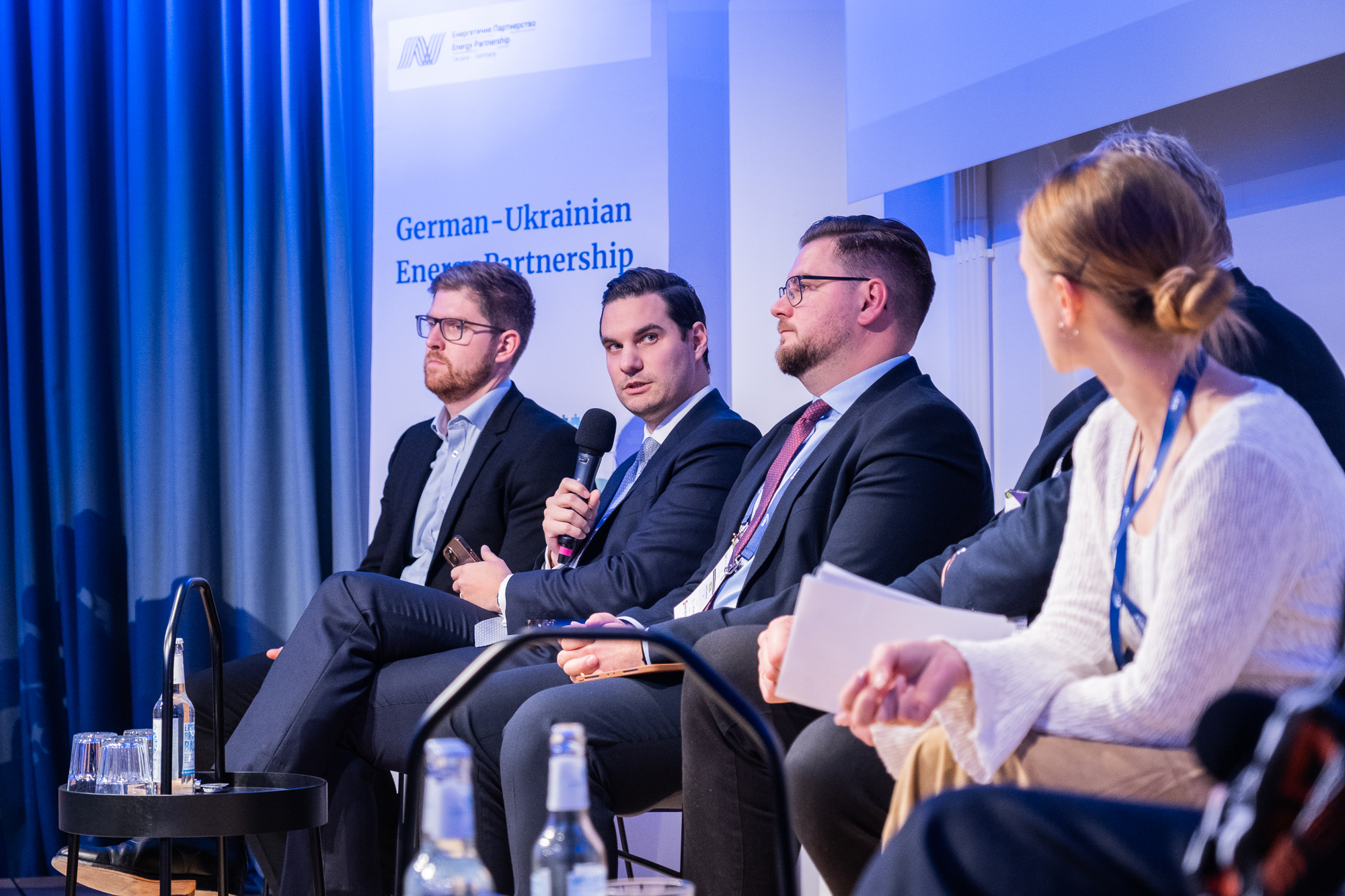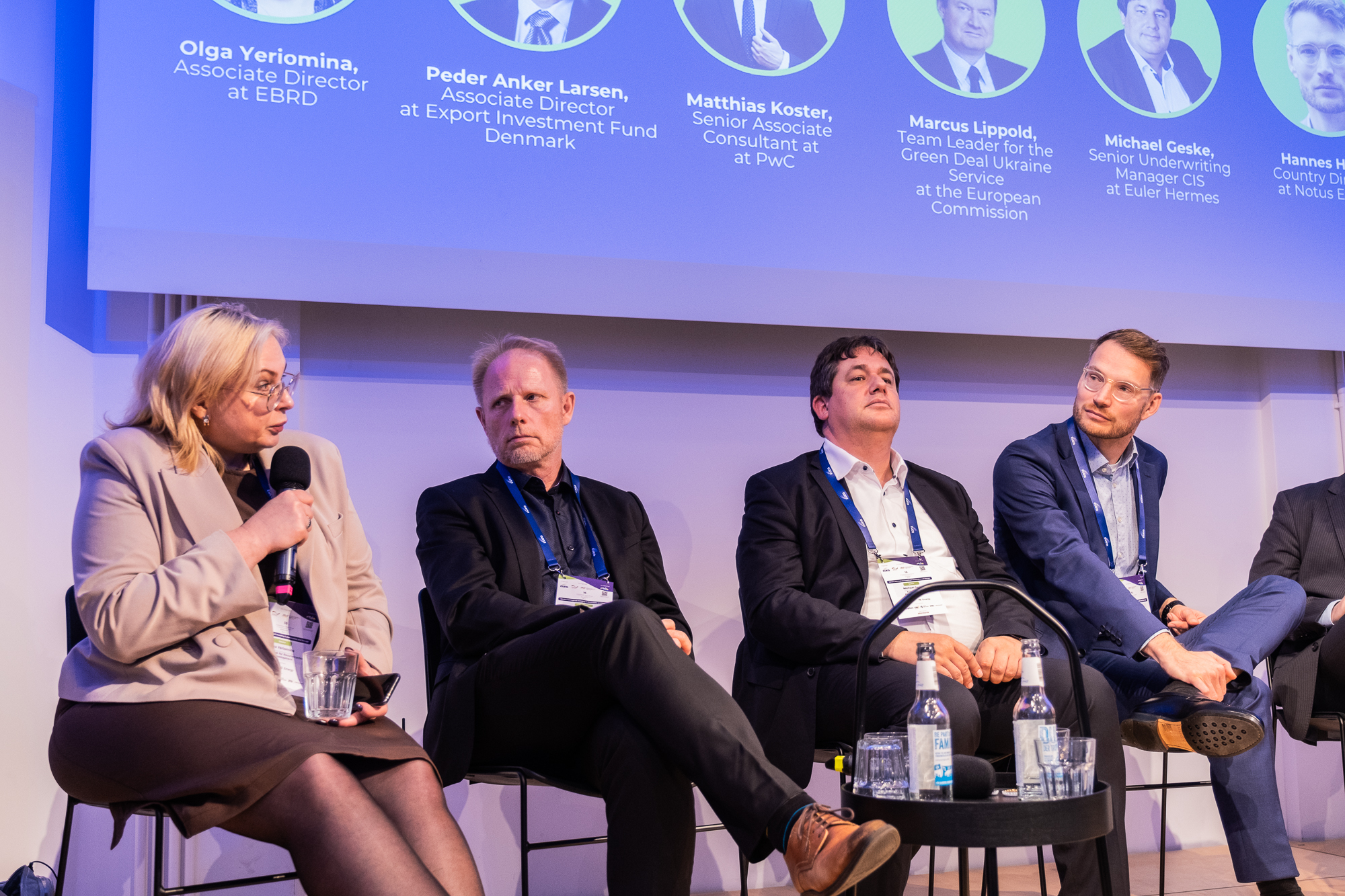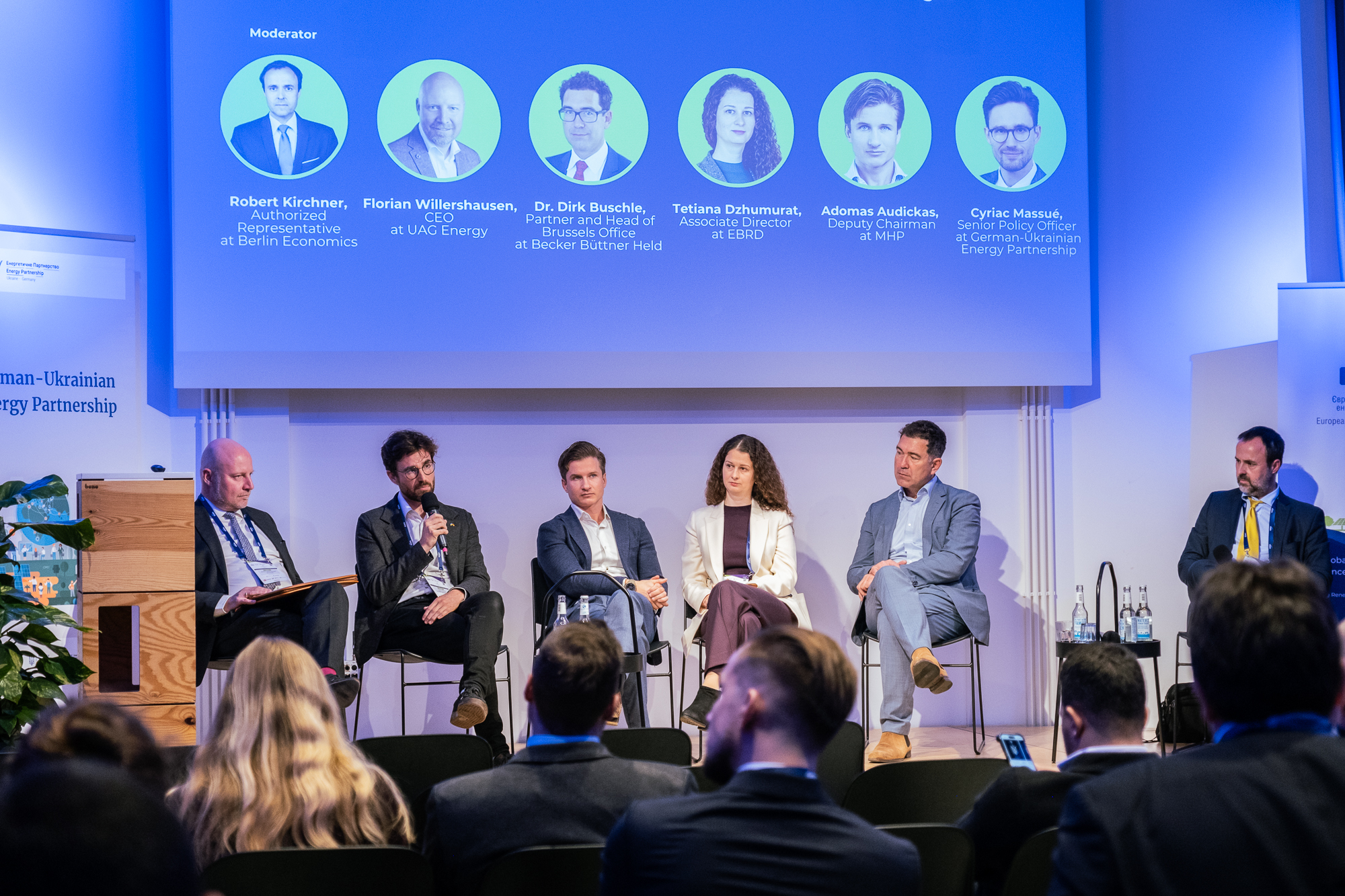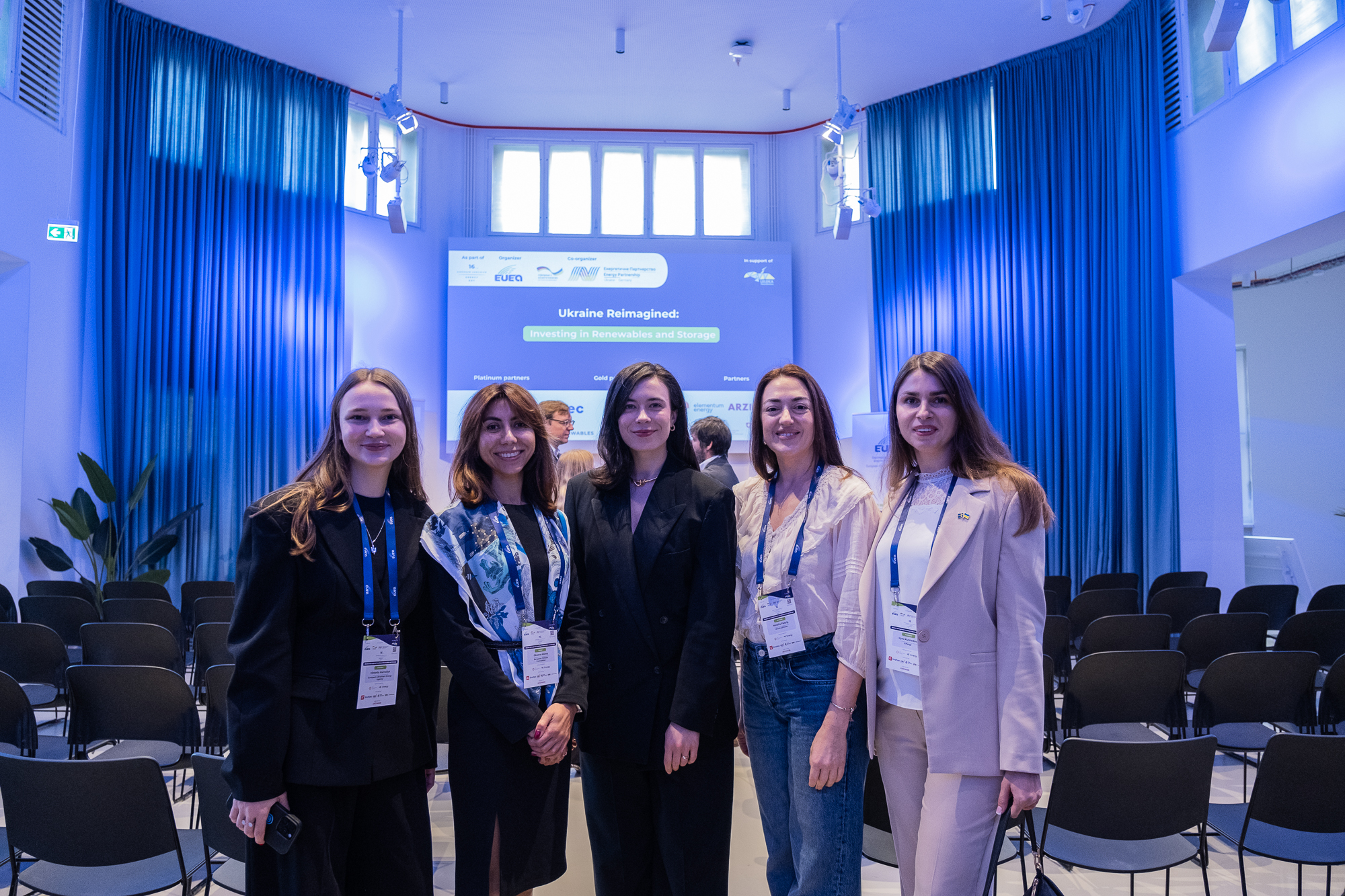
The Ukraine Reimagined: Investing in Renewables and Storage conference took place in Berlin, organized by the European-Ukrainian Energy Agency (EUEA) together with the Secretariat of the German-Ukrainian Energy Partnership, as part of the 16th European-Ukrainian Energy Day. The event brought together over 100 participants and 40 speakers, including representatives from Ukrainian and European businesses, governments, international financial institutions, and the EU.
During discussions at the Ukraine Reimagined: Investing in Renewables and Storage conference in Berlin, special attention was given to issues critically important for the development of Ukraine’s energy sector: regulatory stability and full integration of Ukraine into the European electricity market.
The speakers also highlighted that, despite significant capacity losses, Ukraine’s power system demonstrates resilience and the ability not only to recover but also to grow. Ukrenergo representatives emphasized:
“Despite four years of full-scale war and the loss of around 54% of Ukraine’s available power generation capacity, our country continues to move forward.
Between 2022 and 2025, Ukraine has commissioned an additional 1.3 GW of new renewable capacity, raising the share of green and large hydro generation to about 20% of the total energy mix — higher than before the war. Looking ahead, by 2030 we will need to add roughly 1.4 GW of gas-fired, 0.4 GW of thermal, 3.4 GW of wind, 3.1 GW of solar, and up to 2 GW of storage capacity, requiring an estimated €8 billion in investment. Even under the most difficult conditions, Ukraine is not just restoring what was lost — it is building a decentralized, flexible, and carbon-free power system for the future.”
These figures underline that Ukraine is creating a new energy system architecture based on renewables, decentralization, and integration with the European electricity market.
Georg Zachmann, a leading economist and one of the most authoritative analysts on European energy policy, highlighted:
“Framework conditions are crucial for attracting private investments, and for that we need stability and predictable prices. Deeper market integration is the key stabilising anchor for Ukraine’s electricity market — both on the regulatory side and in terms of price developments. Today, cross-border electricity flows with the EU are significant but far below their potential, and unpredictable market behaviour undermines investor confidence. Looking to 2030, there are two clear paths: either Ukraine integrates fully into the European electricity market, introducing carbon pricing and abolishing price caps to gain stability, liquidity, and investor trust — or it remains isolated under the Carbon Border Adjustment Mechanism, losing up to 60% of its trade potential. The time to act is now. Ukraine and the EU must work together to ensure market coupling by 2028 and avoid a fragmented market structure that would weaken transparency and competitiveness.”
One of the central topics was attracting private investment in renewable energy and expanding corporate power purchase agreements (PPAs). Notus Energy is moving forward with structuring Ukraine’s first corporate PPA project, while Goldbeck Solar, a member of the EUEA, with support from the German government, has begun construction of its first solar power plant co-located with storage in Central Ukraine. These examples show that corporate PPAs, combined with intergovernmental support, are effective tools to mobilize private capital and develop renewables in Ukraine.
Participants of the panel Energy Storage: Unlocking Flexibility and Reliability stressed that energy storage systems are becoming a key element of Ukraine’s evolving power system. From August 2024 to May 2025, Ukrenergo conducted special auctions for the procurement of ancillary services for primary and automatic secondary regulation, creating economic incentives for storage operators. As a result, 788 MW of capacity was acquired for system balancing.
As a practical example, DTEK RENEWABLES, in partnership with Fluence, built a 200 MW energy storage system in a record short timeframe to support system balancing, integration of renewables, and provision of ancillary services to Ukrenergo.
The conference also emphasized the importance of regulatory stability and full integration with the EU electricity market.
Another key topic was the announcement of the Ukraine Renewable Energy Risk Integration Mechanism (URMM), developed by the EBRD and the EU. According to EBRD representatives, URMM is designed to strengthen investor confidence, stabilize revenues for renewable energy producers, and unlock up to €1.5 billion in EU investment to support around 1 GW of new wind and solar projects co-located with storage in Ukraine. With seed capital of €180 million (plans to mobilize up to €300 million in total funding) and competitive auctions over 15 years, it complements existing guarantees and de-risking measures, aiming to address the biggest challenge in Ukraine’s RES sector — electricity offtake — while filling the financing gap and encouraging broader investment in the country’s clean energy future. Success depends, though, on the financial basis of the funding. Thus EBRD is looking at up to $300 million of funding and definitely encourages donations from various parties.
During a separate panel discussion, participants focused on the potential of Ukrainian biomethane as a key component of the EU energy transition.
Adomas Audickas: “Given that Germany is no longer importing Russian gas, it’s a good gesture to import Ukrainian biogas.”
Dirk Buschle: “Ukrainian biogas is an excellent business case for filling the GHS emission reduction quota for transport in Germany. But the problem is that the law regulating this is “silent” on imports – uncertainty leaves wide discretion for authorities in charge of crediting biomethane against quota and leads to discriminatory treatment of biomethane imports from Ukraine. Hopefully, this barrier will be removed soon. “
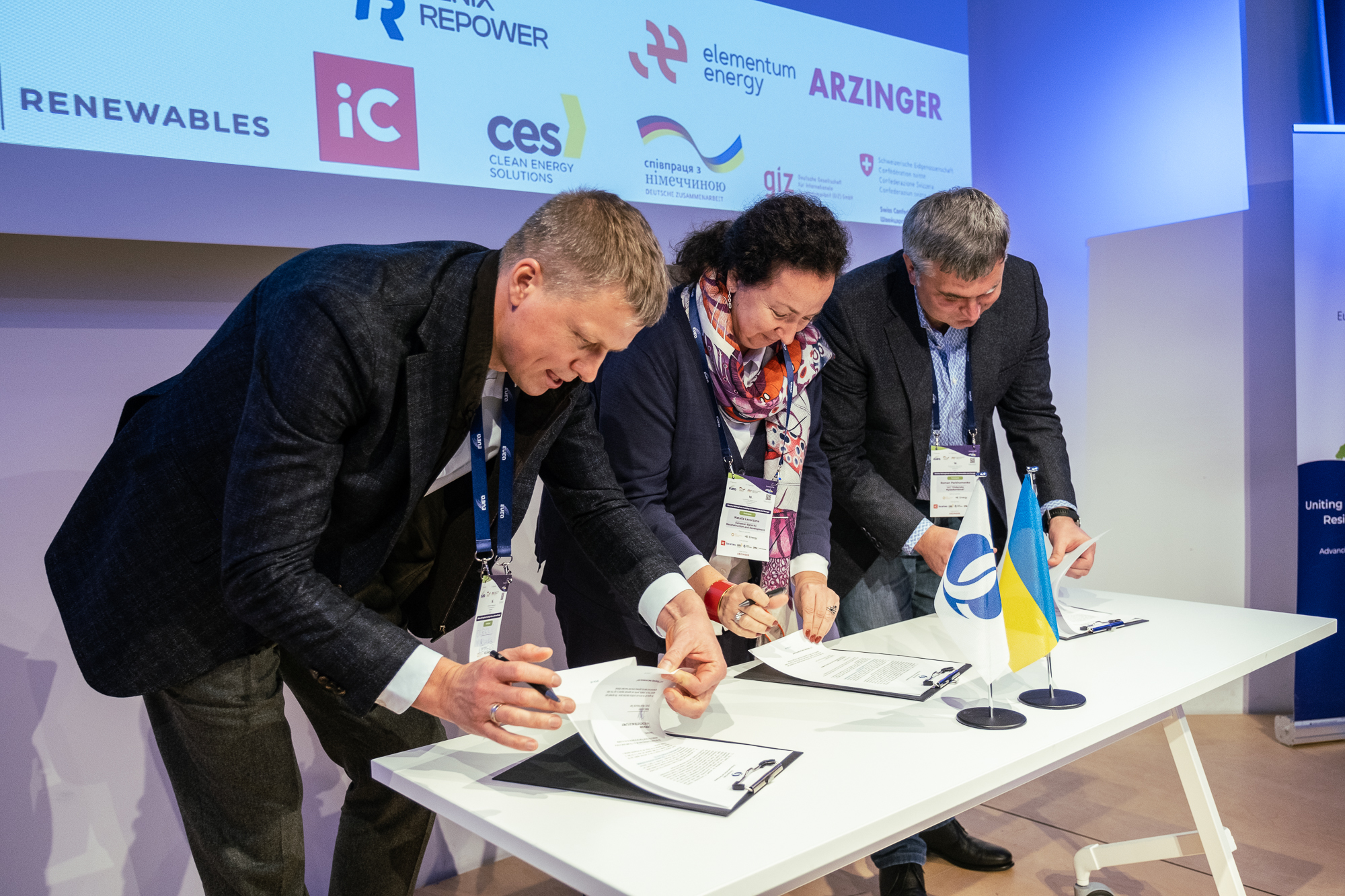
A practical milestone achieved during the conference was the signing of a Mandate Letter between the EBRD, ReAgro, and the Globino Group. The document grants the EBRD a mandate as lead arranger to conduct full financial, technical, and environmental due diligence and to prepare the structure of long-term project financing, subject to satisfactory results and internal approvals.
The signing marks an important milestone for two biomethane projects in Poltava region — Globyno and Novoselivka— with a combined capacity of around 10 million m³ of biomethane per year (≈100 GWh). Both projects have already received support under The InnovateUkraine Competition, funded by UK International Development.
Ukraine is steadily moving toward creating a green, decentralized, and integrated power system that ensures energy security, positions the country as a reliable EU partner, and attracts investors. Despite the war, the renewable energy sector is growing, and new financial instruments, corporate PPAs, energy storage, biomethane projects, and international cooperation are laying the foundation for Ukraine’s green economic recovery.