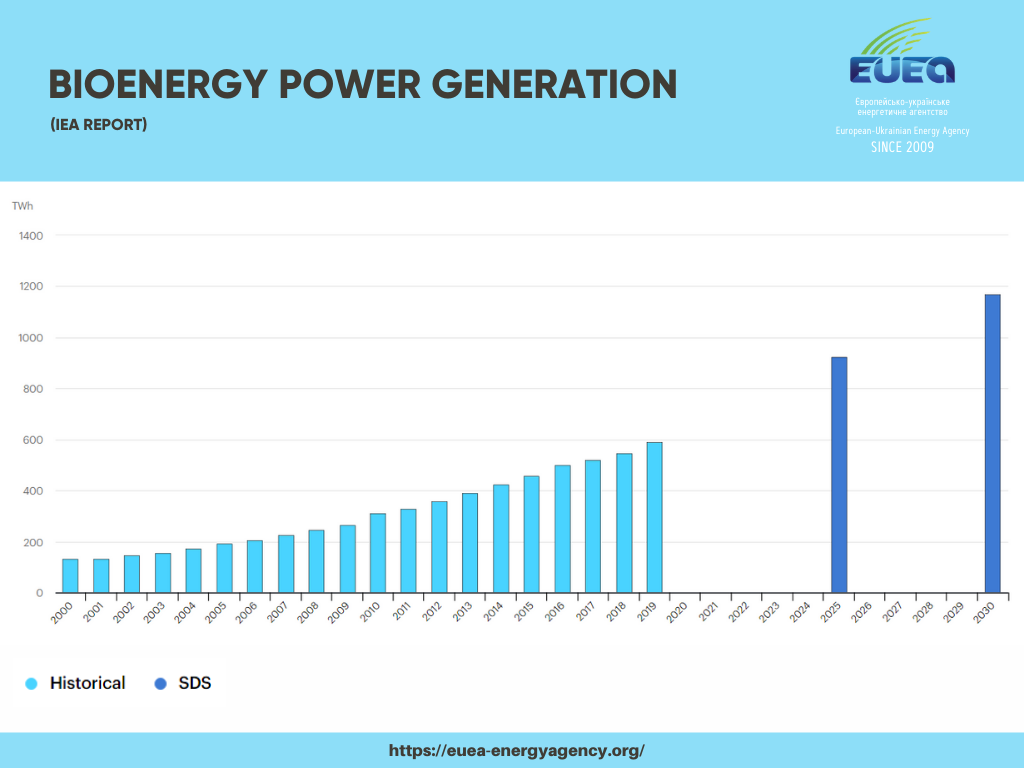
In 2019, bioenergy electricity generation increased by over 5%, just below the 6% annual rate needed through 2030 to reach the SDS level. Recent positive policy and market developments in emerging economies indicate an optimistic outlook for bioenergy, supporting its “on track” status.
For instance, China introduced a new clean-heat initiative that is expected to raise the deployment of biomass- and waste-fuelled co‑generation plants. The greatest deployment is anticipated in areas with access to biomass resources and policies to phase out coal-fired boilers to improve air quality.
Energy-from-waste (EfW) deployment is also growing strongly as increasing urbanisation and economic development lead to more municipal solid waste production. EfW technology offers a solution superior to landfills for cities to manage municipal solid waste, and China has the highest installed EfW capacity globally.
In addition, China is promoting the use of agricultural residues for bioenergy (as an alternative to uncontrolled in-field burning that deteriorates air quality).
In Brazil, the federal RenovaBio plan, due to come into force in 2020, will boost the production of transport biofuels and in turn will result in additional bagasse-based electricity generation from both existing facilities and new mills.
In India, fiscal support and capital subsidies underpin capacity expansions of existing plants and greenfield investments, mainly in bagasse co-generation plants utilising by-products of the sugar and ethanol industries. Mexico and Turkey also show signs of expanding bioenergy deployment, especially for EfW and biogas.
Here you can find the full statistics of Bioenergy power generation in Sustainable Development Scenario