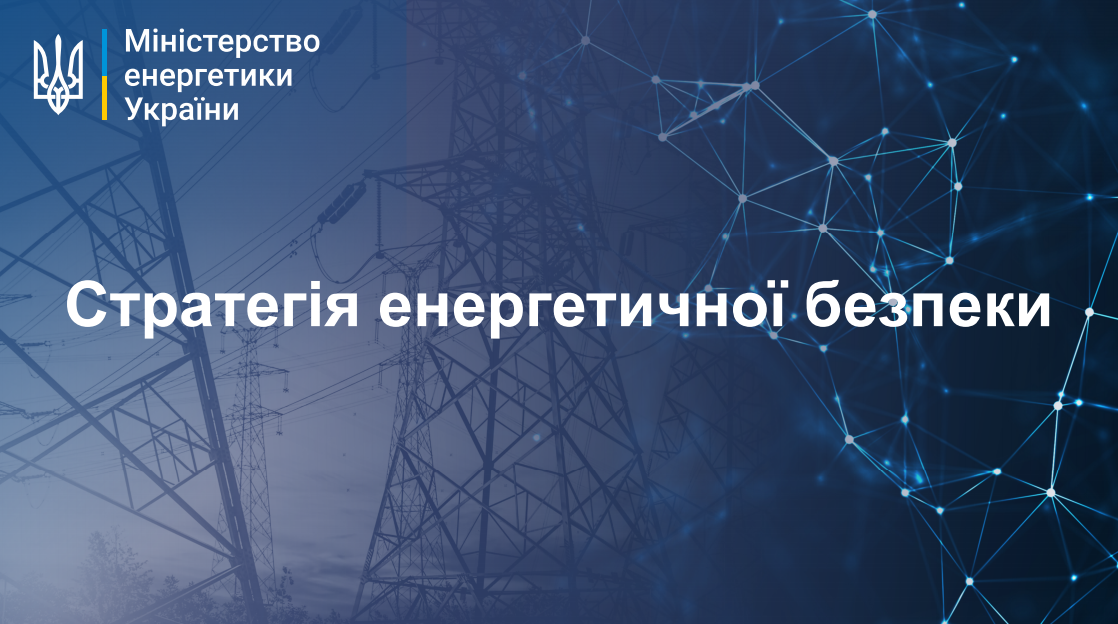
On August 4, 2021, the Government approved the Energy Security Strategy of Ukraine, which was previously developed by the Ministry of Energy of Ukraine.
The purpose of the strategy: to determine the target model of the energy security system as a component of national security and the formation of directions for its implementation, focused on the implementation of the National Security Strategy of Ukraine.
Period: until 2025.
The main task of the Energy Security Strategy is the successful integration of Ukraine into the EU, the synchronization of Ukraine’s energy systems and markets with European ones and their sustainable development. The strategy focuses on 29 potential threats to Ukraine’s energy sector, the most urgent of which are:
- State of the fuel and energy complex. As it is known, Ukraine is currently working in synchrony with the energy systems of countries that pose a potential threat to Ukraine’s national security, and can not be considered in the short and long term as a reliable and secure partners – the Russian Federation, Belarus.
- Monopolization of energy markets of Ukraine. For a long time, the formation of energy policy in Ukraine was carried out in the interests of certain groups of influence, which resulted in a high concentration of capital in the hands of certain individuals and enterprises, reduced transparency, increased indebtedness of energy markets and increased energy costs.
- Depreciation of Ukraine’s energy infrastructure. Depreciation of electric networks of Ukraine is almost 50% of the total, and the wear of some enterprises of individual companies reaches 70%. About 40% of heating points are in an emergency condition. Of the 309 thousand km of the gas distribution network, the service life has expired for 18.5 thousand km, and 15 thousand km of networks are in a state of emergency. Almost all thermal and nuclear power plants in Ukraine have reached the end of their service life, they are technically obsolete and dangerous, so they must be reconstructed or decommissioned, replaced by other power plants.
- High share of energy imports in the structure of the fuel and energy complex. In 2020, imported gas accounted for 30% of all natural gas consumption in Ukraine. Ukraine’s dependence on imports of petroleum products is estimated at 85%, so the share of petroleum products produced in Russia or from Russian raw materials (in the Republic of Belarus) exceeds 85%. Also, Ukraine is still forced to import anthracite coal mainly from Russia.
- Crisis in the electricity market. There is a crisis of non-payment in the electricity market, the debt of which at the end of 2020 is estimated at UAH 40 billion, which significantly reduces the investment attractiveness of Ukraine as a potential partner.
- Lack of flexibility of the Integrated Power System (IPS) for electricity generation from renewable energy sources (RES). Ukraine does not have enough energy storage systems to cover peak loads. Also, the imperfect mechanism of forecasting supply and demand, low generation maneuverability and non-adoption of appropriate legislation leads to problems of balancing the system, forced restrictions, rising debt to RES producers at the “green” tariff and loss of investment attractiveness of Ukraine.
- Inconsistency of actions of the subjects of the management system. Incoordination in certain actions, decisions and powers of various public authorities leads to ineffective decisions that have a negative impact on the development of the energy sector. There are constant changes in the legal field, functions and powers of the authorities in shaping energy policy.
The Energy Security Strategy of Ukraine also provides principles for energy security and scenarios of changes in the energy sector.
Basic principles of the strategy:
- Priority to ensure sustainable development of the national economy and ensure access to reliable, sustainable, affordable energy sources for all consumers.
- Transparency of state regulation and stability and consistency in the implementation of energy policy.
- Liberalization, promotion of competition and prevention of monopoly.
- State intervention in the activities of entities and market pricing mechanisms only within the scope and in the manner prescribed by law.
- Priority of innovative and technological development of the energy sector, taking into account the priorities of energy security, environmental protection and low-carbon economy.
- Preventing energy poverty.
- Ensuring energy security through solidarity between all actors in energy markets and the development of public-private partnerships.
Scenarios:
1.“No change” scenario: preservation of current trends in the formation and implementation of energy policy, as well as the principles of functioning of energy markets and business culture of economic entities.
Result: maintaining current trends in the long run will increase Ukraine’s dependence on fossil fuel imports, maintain the trend of making management decisions that are beneficial within certain groups of influence, hinder investment, lead to imbalances in the energy system and increase social discontent.
2.“Unfriendly influence” scenario: in addition to the implementation of the “no change” scenario, there will be an increase in Russia’s external influence aimed at gaining control over Ukraine’s energy policy.
Result: Ukraine’s energy policy will become completely under the control of the Russian Federation, which will create critical threats to national security.
3.“Positive transformation” scenario: consistent and effective implementation of the priority of the country’s development determined by the Constitution of Ukraine and the National Security Strategy of Ukraine, namely the irreversibility of the European and Euro-Atlantic course of Ukraine.
Result: formation of a favorable investment environment, consistency and transparency of decision-making by state bodies, which will lead to reliability and confidence of market participants in predictability and stability of the legal framework, increase competitiveness and market conditions of all participants, synchronization of IPS with EU system, energy independence of Ukraine, etc.
The strategy defines the strategic goals of energy security for the implementation of the “positive transformation” scenario, namely:
- Priority to ensure sustainable development of the national economy and ensure access to reliable, sustainable, affordable energy sources for all consumers.
- Transparency of state regulation and stability and consistency in the implementation of energy policy.
- Liberalization, promotion of competition and prevention of monopoly.
- State intervention in the activities of entities and market pricing mechanisms only within the limits and in the manner prescribed by law.
- Priority of innovative and technological development of the energy sector, taking into account the priorities of energy security, environmental protection and low-carbon economy.
- Preventing energy poverty.
- Ensuring energy security through solidarity between all actors in energy markets and the development of public-private partnerships.
Read more about the strategy here: https://cutt.ly/CQQrGiM