On May 22, the European-Ukrainian Energy Agency (EUEA) held an event in Kyiv titled “Green housing: expensive today, more expensive tomorrow. Why green construction is essential now?“ The event was organized as part of the SMARTER4EU project, funded by the European Commission.
Participants included representatives from local communities, businesses, sector associations, international partners, and developers.
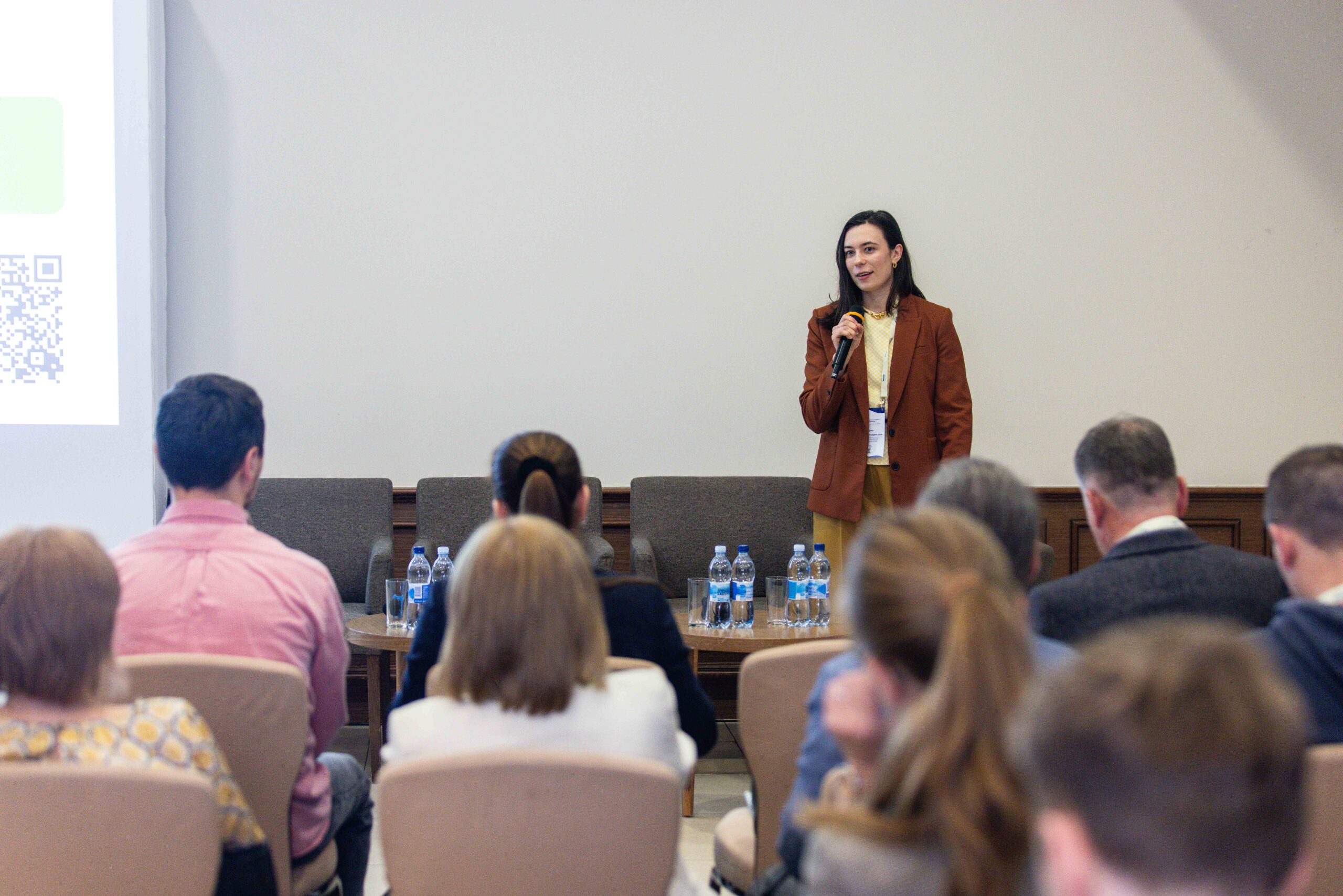
In her opening remarks, EUEA Director Anastasiia Vereshchynska outlined the main goal of the event — to initiate a deep strategic discussion about the future of housing policy in Ukraine.
“We do not question whether green housing is possible in Ukraine — we already know it is, and it must be done. Because building cheaply today means shifting the costs onto those who will live in and maintain this housing in the future. And those are our citizens, in a country with an unstable economy,” Anastasiia emphasized.
Therefore, energy-efficient construction should not be an option but a national policy — an integral part of reconstruction, social justice, and the path toward energy independence.
The morning presentations focused on implementing NZEB standards — Nearly Zero-Energy Buildings.
Artur Obidnyk, Head of the Methodological Support and Energy Efficiency Regulation Department at the Ministry for Communities and Territories Development of Ukraine, stressed that Ukraine is gradually aligning with European standards, and from 2025, all new public buildings must comply with NZEB requirements.
“We deliberately introduced these requirements without immediate mandatory enforcement to give the market time to adapt. But this standard will become the norm — and we must be ready,” he said, highlighting the importance of harmonizing Ukrainian legislation with the new European Directive 1275/2024, which aims for full decarbonization of the housing stock by 2050.
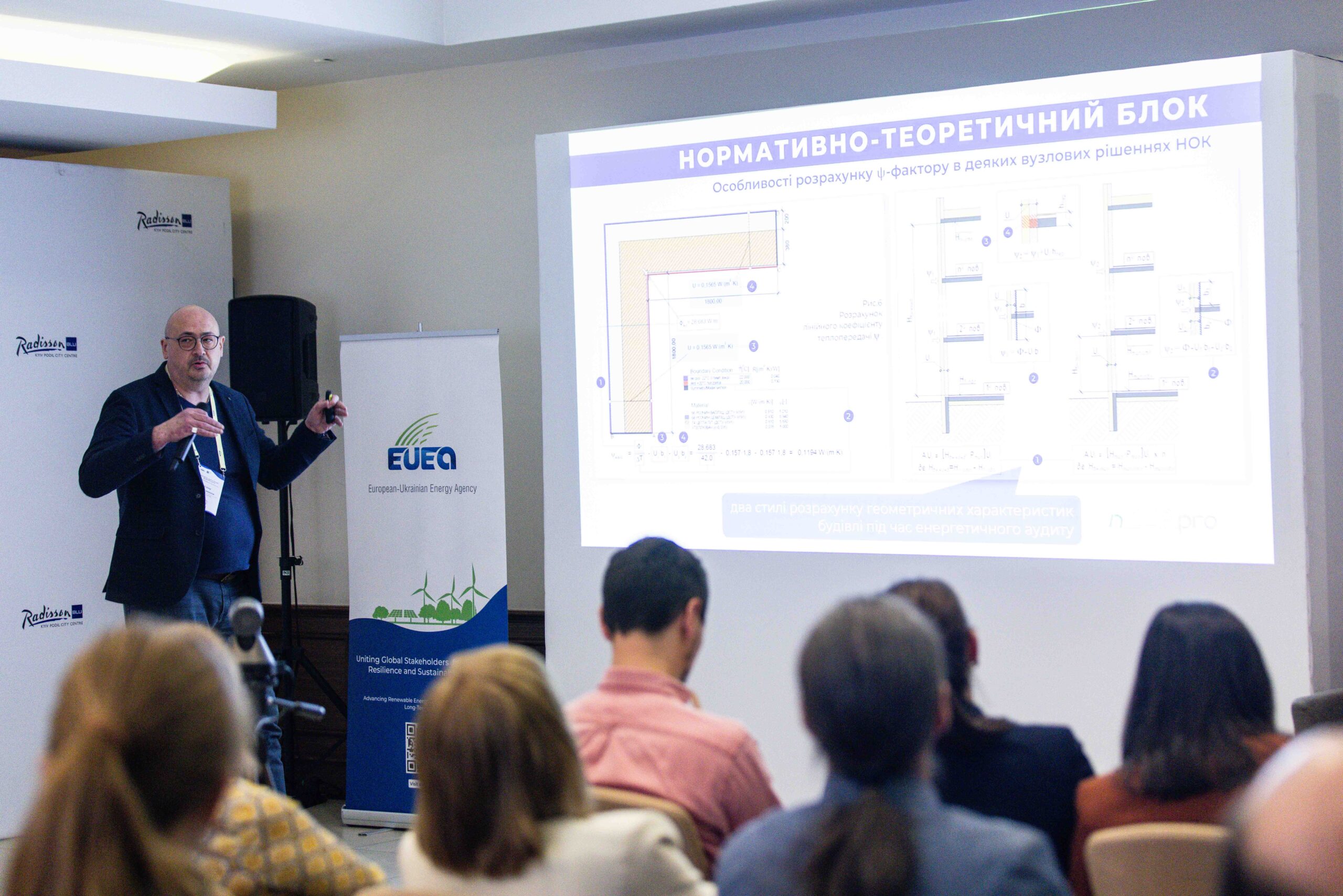
The practical dimension of the event was strengthened by a presentation of the “NZEB Technical Solutions Album” by expert Petro Shamilov from nZEB.pro. According to him, this is not just a catalog but a comprehensive tool for architects, energy auditors, and designers, allowing them to apply proven structural and engineering solutions immediately in their projects.
“It includes thermal simulations, construction details, DWG files — a database ready for use now,” Petro noted.
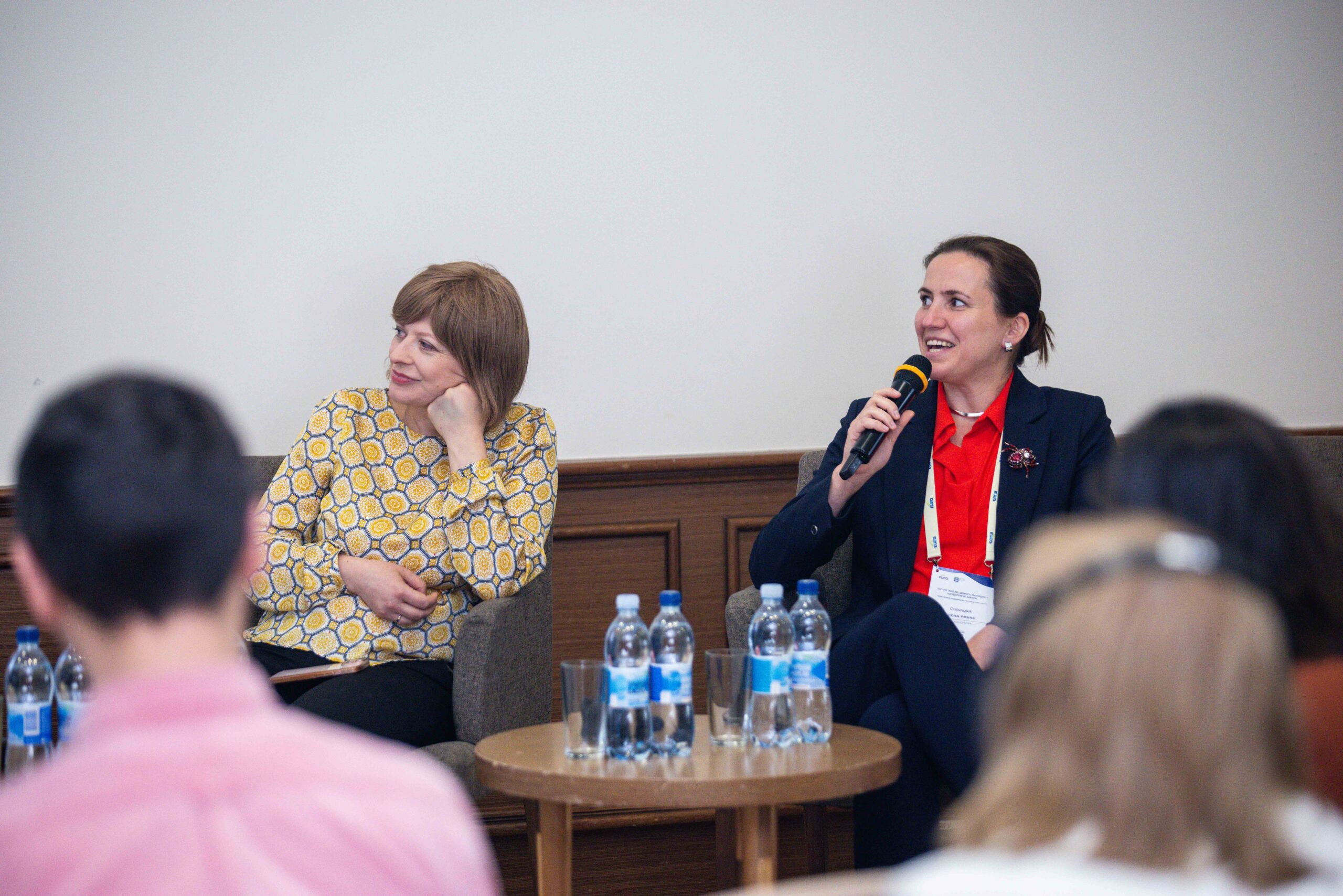
During the first session, “New Construction: Can It Be Green?” moderated by Olena Rybak, Vice Chair of the EUEA Board and Managing Director of iC consulenten, participants discussed current approaches and challenges in sustainable residential construction.
Pat Barry, Director of the Irish Green Building Council, presented the Home Performance Index (HPI) certification system, which plays a key role in developing green housing in Ireland:
“HPI assesses over 30 criteria across environmental, social, health, and economic dimensions, complies with national standards and EU taxonomy, and facilitates access to green financing. The system is particularly effective for housing projects without strong consulting support. A simplified certification level is available for small developers.”
Yurii Telipskyi from the Lviv Intercity Bureau of Technical Inventory shared about a social housing project in Lviv, implemented with EU support for people undergoing rehabilitation after injuries:
“The construction meets four key requirements — B+ energy efficiency class, accessibility, safety, and environmental friendliness. The combination of central heating, heat pumps, and solar power ensures reliable energy supply even during outages.”
Tetiana Boiko, representative of the Civil Network OPORA, emphasized the importance of pilot NZEB projects in Ukraine:
“Pilot NZEB projects create conditions for learning, demonstrate energy savings in operation, and help attract grant financing.”
Iryna Sukhodub, SMARTER4EU expert, presented an analysis of Ukrainian housing projects’ compliance with Romanian Green Homes standards:
“Ukrainian projects already meet several criteria — site selection, transport accessibility, light pollution reduction, resource monitoring, and efficient water use. However, more work is needed on circular economy implementation, climate adaptation, eco-friendly materials, and waste management.”
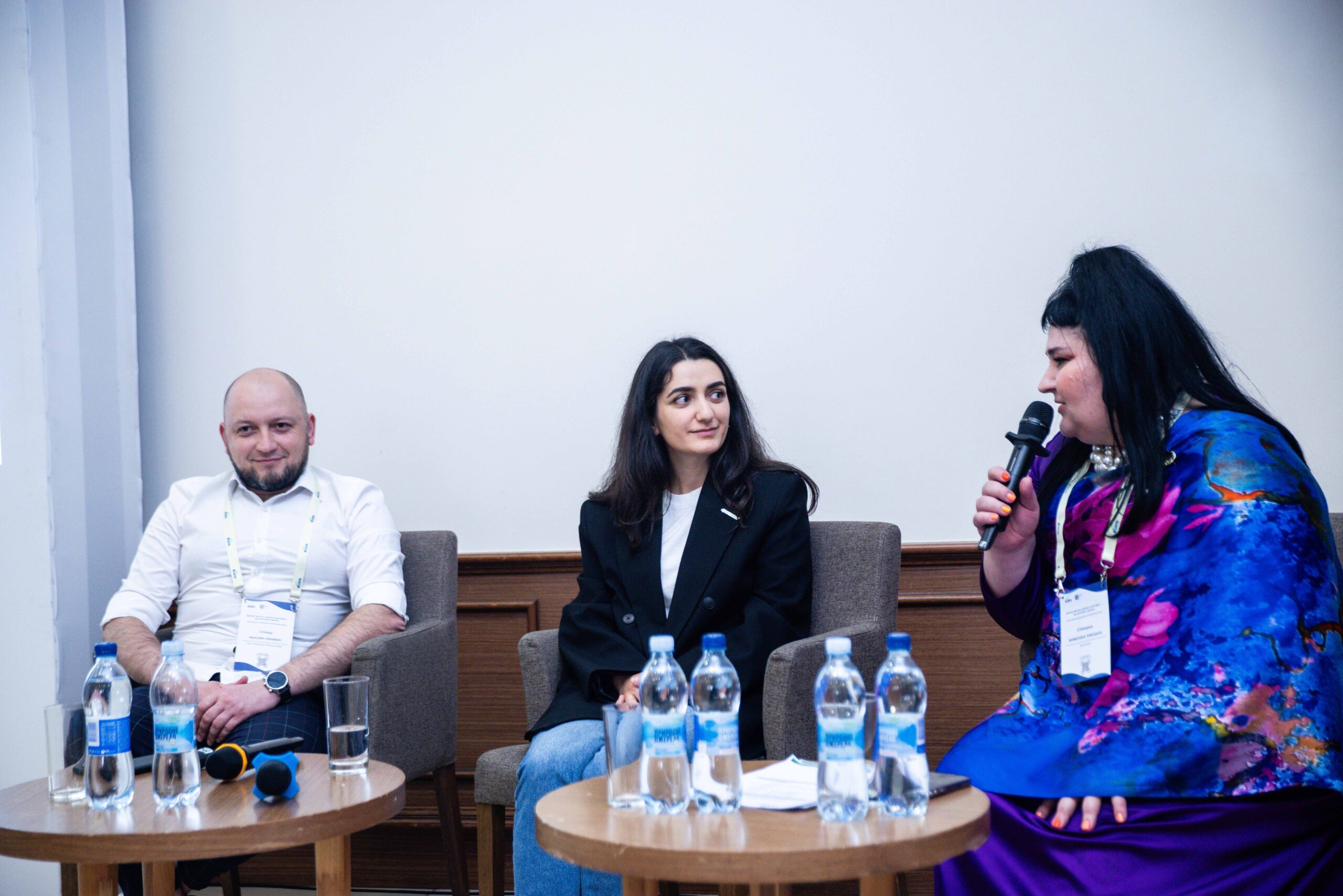
The second session — “Recovery and Reconstruction: How to Integrate the Best Solutions” — was moderated by Anzhelika Livytska, EUEA Board member and Head of Energy and Natural Resources Practice at the Arzinger law firm.
The discussion focused on challenges of modernizing the old housing stock — which accounts for the majority of energy consumption.
Marina Abramyan from Greenpeace stressed:
“We must decarbonize the entire housing stock by 2050. This is not a wish — it is a commitment enshrined in EU legislation. We must be part of this movement.”
She emphasized that reconstruction is as important as new construction, and many municipalities in Ukraine have already begun taking action.
Maksym Syniavin, representative of the Trostianets City Council, spoke about how their community is modernizing damaged housing using modern solutions such as insulation and individual heating substations, which help save municipal budget funds.
Meanwhile, Vitalii Poplavskyi from Panasonic Ukraine highlighted the shortage of qualified personnel and spoke about the opening of three training centers for green specialists at educational institutions:
“We are already training installers, veterans, youth. Because without skilled people — technologies are powerless.”
A memorable conclusion was the interview with Andrii Berestian, General Director of Danfoss Ukraine. In a conversation with Forbes Ukraine Program Director Liubov Petrushko, he stressed that Danfoss does not just sell equipment — it shapes the market of right solutions:
“If a community has a school, hospital, kindergarten — we can advise on how to make them energy-efficient. But the main thing is strategy. Communities need to see themselves in 2030 or 2050. Without this, all actions will be chaotic.”
His remarks were a call for a systemic approach — from vision to implementation.
The event aimed not only to share knowledge but also to deliver a clear message: green housing is an inevitable trend, a demand of the time, and the key to Ukraine’s European future. The event demonstrated that necessary changes have already begun — from updating regulatory frameworks to implemented pilot projects. Scaling these processes is possible only through close cooperation between the government, business, communities, and international partners.
The outcomes included concrete initiatives: updating building codes to incorporate NZEB, launching grant programs for homeowners’ associations (HOAs), developing municipal roadmaps for thermal modernization, introducing non-price criteria in public procurement, and large-scale specialist training.
Going forward, EUEA will continue work on informational materials, educational programs, research, and community support. We are convinced that green housing is not a whim, but a practical solution and an investment in energy security, economic resilience, and quality of life for every Ukrainian.
“We no longer have time to delay. Green housing must become the norm. And we are working to make this a reality,” summarized EUEA Director Anastasiia Vereshchynska.
We thank all partners, experts, speakers, and participants who shared their experience, supported the discussion, and together with us shape the future of Ukraine’s reconstruction through the lens of sustainability.